
Articles

Articles, updates, and practical notes on peptides.
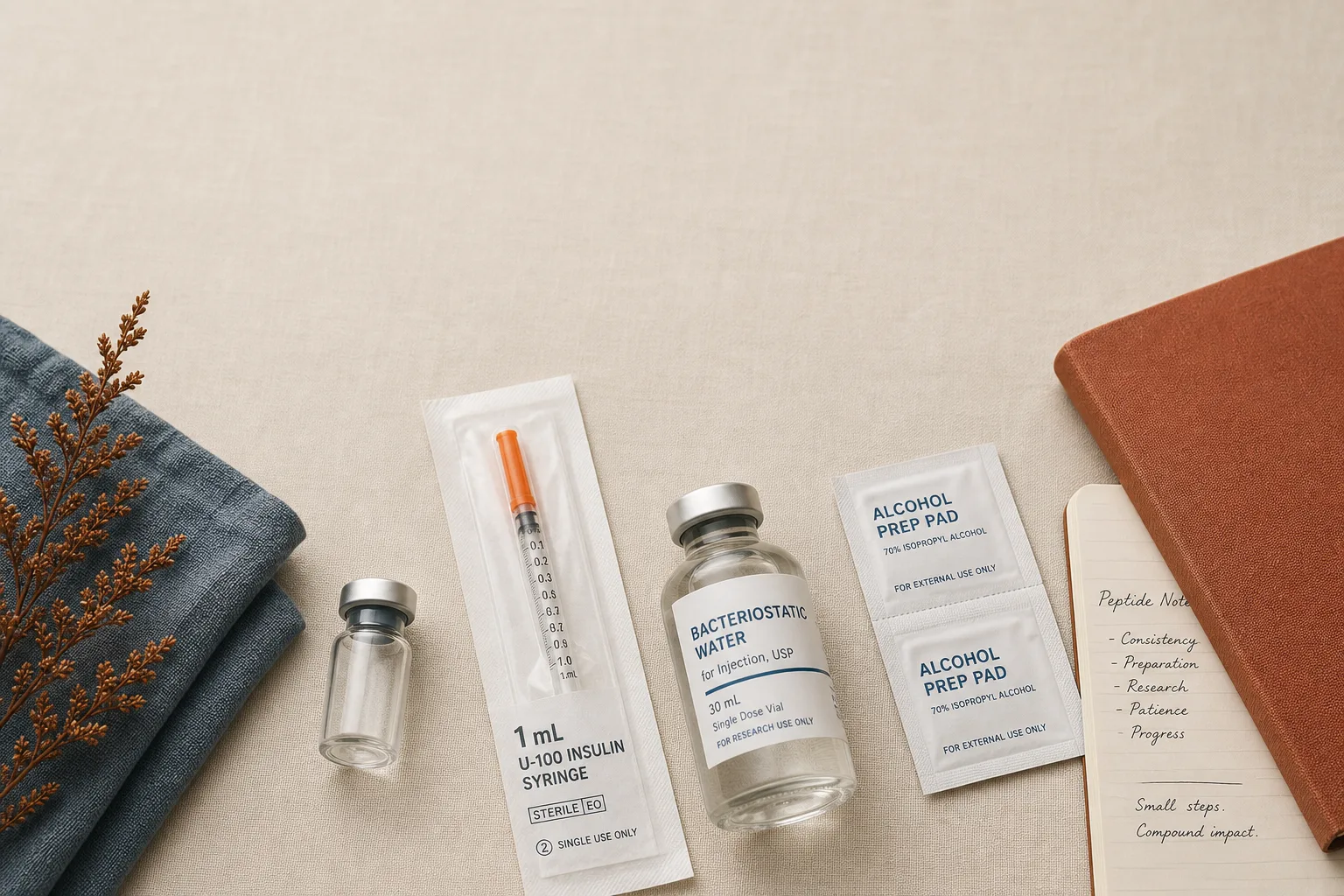
Editorial flat-lay on bone-coloured linen: a small unbranded vial, a single 1 mL insulin syringe in its packet, a bottle of bacteriostatic water, a strip of alcohol wipes, and a folded paper notebook with the corner of a written page peeking through. Soft overhead light. Restrained palette of slate-blue, warm rust and bone, magazine-grade typography, no faces, generous negative space at the top for a headline.

Your First Peptide Cycle: Planning, Expectations, and What to Actually Decide

May 04, 2026By Peptide Science Editorial

After Peptides 101 conceptually, this is the cycle-planning piece. Pick one goal, pick one compound class, set up supplies and baseline, run the protocol with a 4-week reassessment milestone. The mistakes first-cycle users make and the choices they actually have to make, in order.
beginnerfirst-cycleprotocolplanningoperator-reference
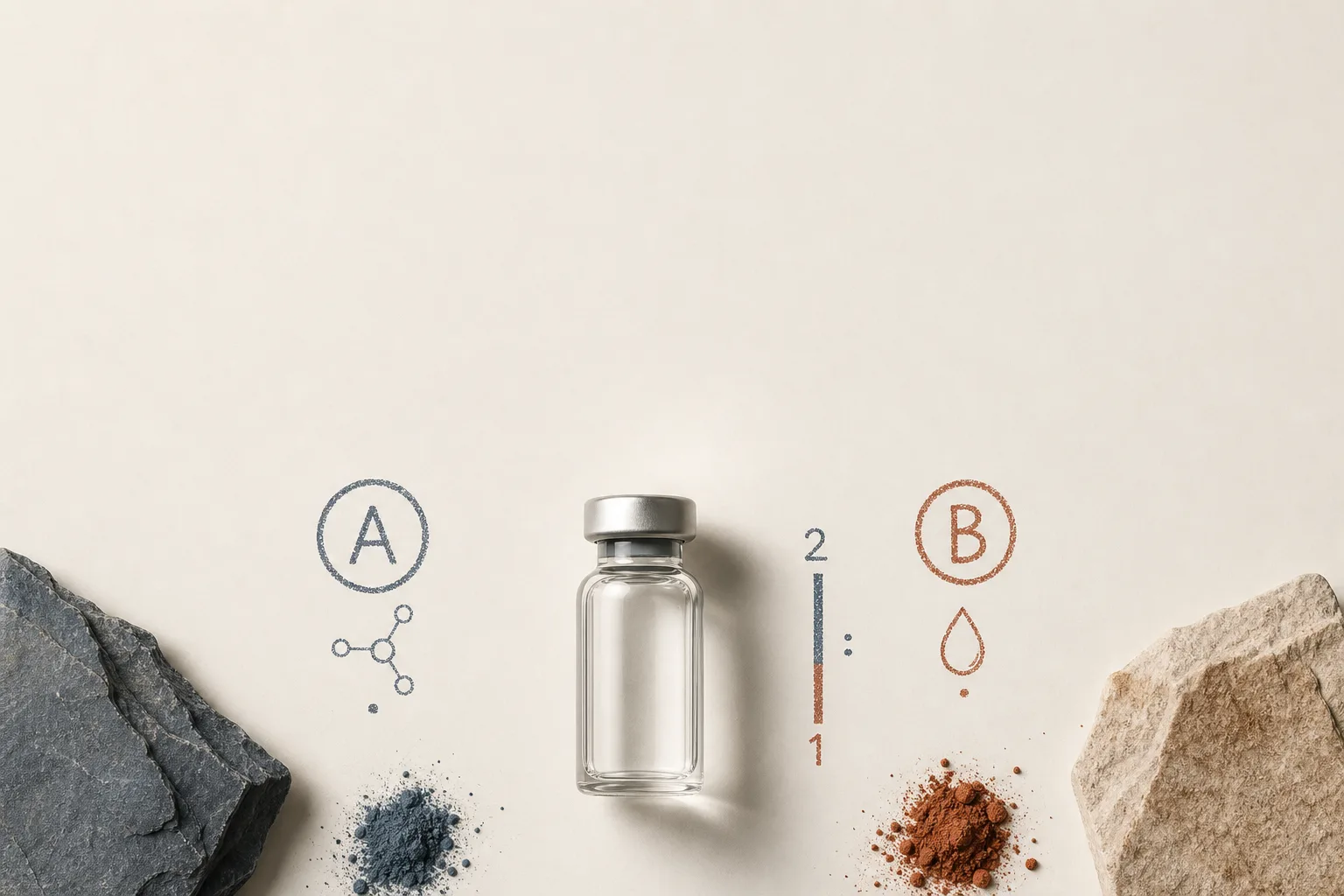
Editorial overhead still life: a small unbranded glass vial centered on a clean off-white surface, with two small chalk-style icons floating around it labeled 'A' and 'B' in different muted hues to suggest a two-component blend. A thin ratio bar (2:1) drawn beside the vial as a visual annotation. No labels on the vial itself, no faces, no clinical setting. Magazine-cover composition, soft directional light, desaturated palette of bone, slate-blue and warm rust, generous negative space at the top for a headline.

Blends and Ratio-Based Dosing: Driver Logic and Pitfalls

May 03, 2026By Peptide Science Editorial

How ratio-based dosing works in blended vials, with non-prescriptive examples and risk controls.
guideblendsratiocalculator
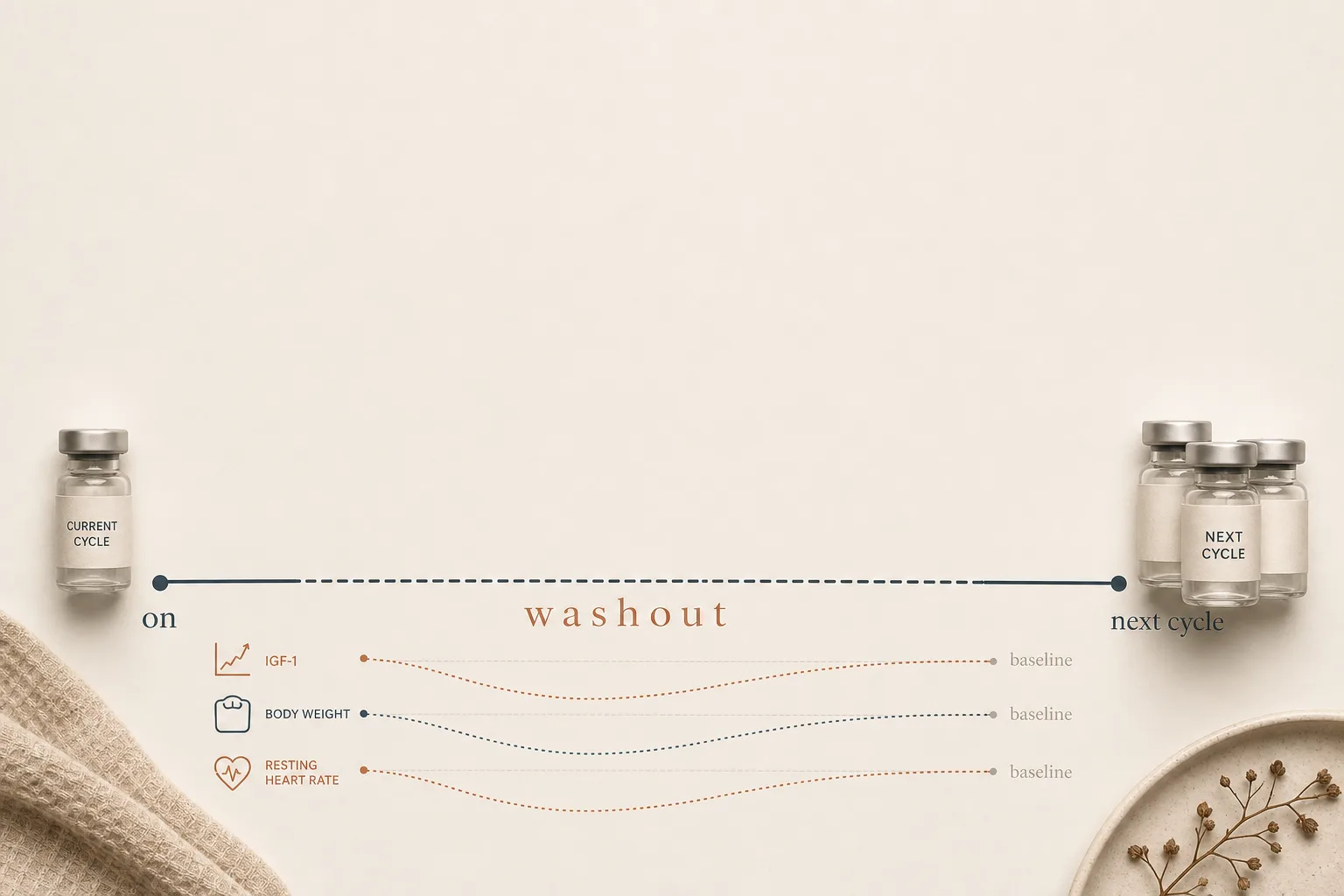
Editorial flat-lay infographic on a soft off-white surface: a horizontal timeline runs from left to right with the word 'on' on the far left transitioning into a long blank stretch labelled 'washout' in the middle, ending with a small cluster of vials on the right labelled 'next cycle'. Three subtle wave-line annotations along the timeline trace IGF-1, body weight, and resting heart rate slowly returning to baseline during the washout stretch. Magazine-grade editorial style, restrained palette of bone, slate-blue, and warm rust, sans-serif typography, generous negative space at the top for a headline.

Coming Off: The Washout Window

May 03, 2026

What actually happens when you stop a peptide protocol - IGF-1 returning to baseline, GLP-1 appetite rebound, sleep regression, body-comp drift. Per-class washout expectations and the common mistakes that make off-cycles harder than they need to be.

washoutcyclingdiscontinuationreboundoff-cycle
Editorial overhead still life on a soft off-white surface: two small unbranded glass vials placed at the apex of a thin chalk-drawn triangle with a roll of athletic tape at the bottom point, suggesting connection. No faces, no clinical setting, no needles depicted. Magazine-cover composition, restrained palette of bone, slate-blue and warm rust, sans-serif typography, generous negative space at the top for a headline.

BPC-157 + TB-500: The Synergy Story Beyond the Headlines

May 02, 2026By Peptide Science Editorial

Two repair peptides that hit different rate-limiting steps of healing - angiogenesis-and-fibroblast versus cell-migration-and-actin-remodelling. Why the pair works for tendon work and where the synergy thesis stops being clean.
bpc-157tb-500thymosin-beta-4synergytendonhealingdeep-dive
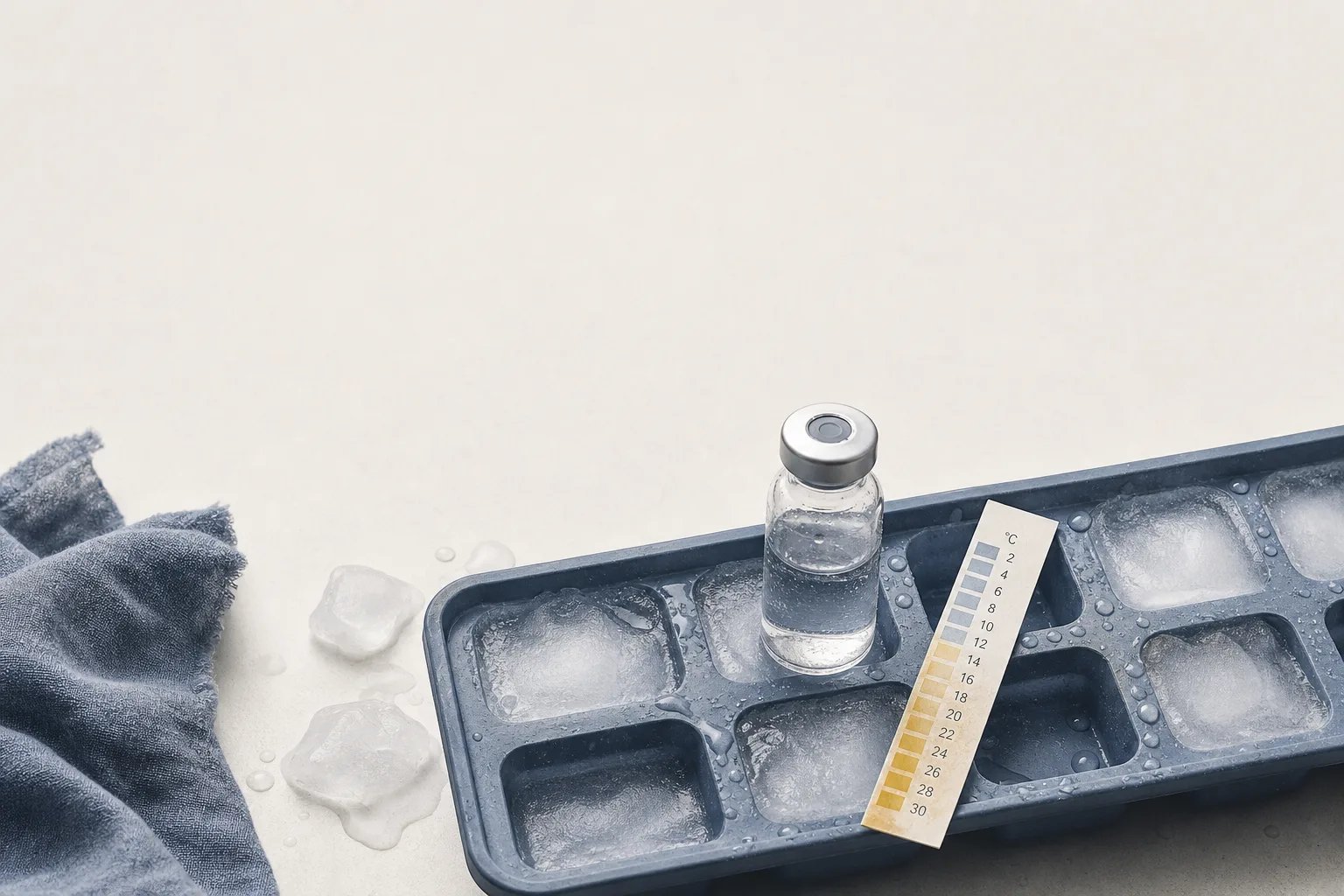
Editorial overhead still life on a soft off-white surface: a small unbranded glass vial sitting on a slowly-melting ice-cube tray with a thin paper temperature-strip indicator beside it, partially yellowed from a thermal excursion. No faces, no clinical setting, no needles depicted. Magazine-cover composition, restrained palette of bone, slate-blue and pale ice-blue, sans-serif typography, generous negative space at the top for a headline.

Cold-Chain Reality: What Actually Happens When You Break Fridge Rules

May 02, 2026By Peptide Science Editorial

Peptide-by-peptide stability data, the difference between ‘degraded’ and ‘dead’, why the Arrhenius rule of thumb gets it half right, and the excursion-tolerance question every traveller actually asks.
cold-chainstabilitystoragetraveldeep-dive
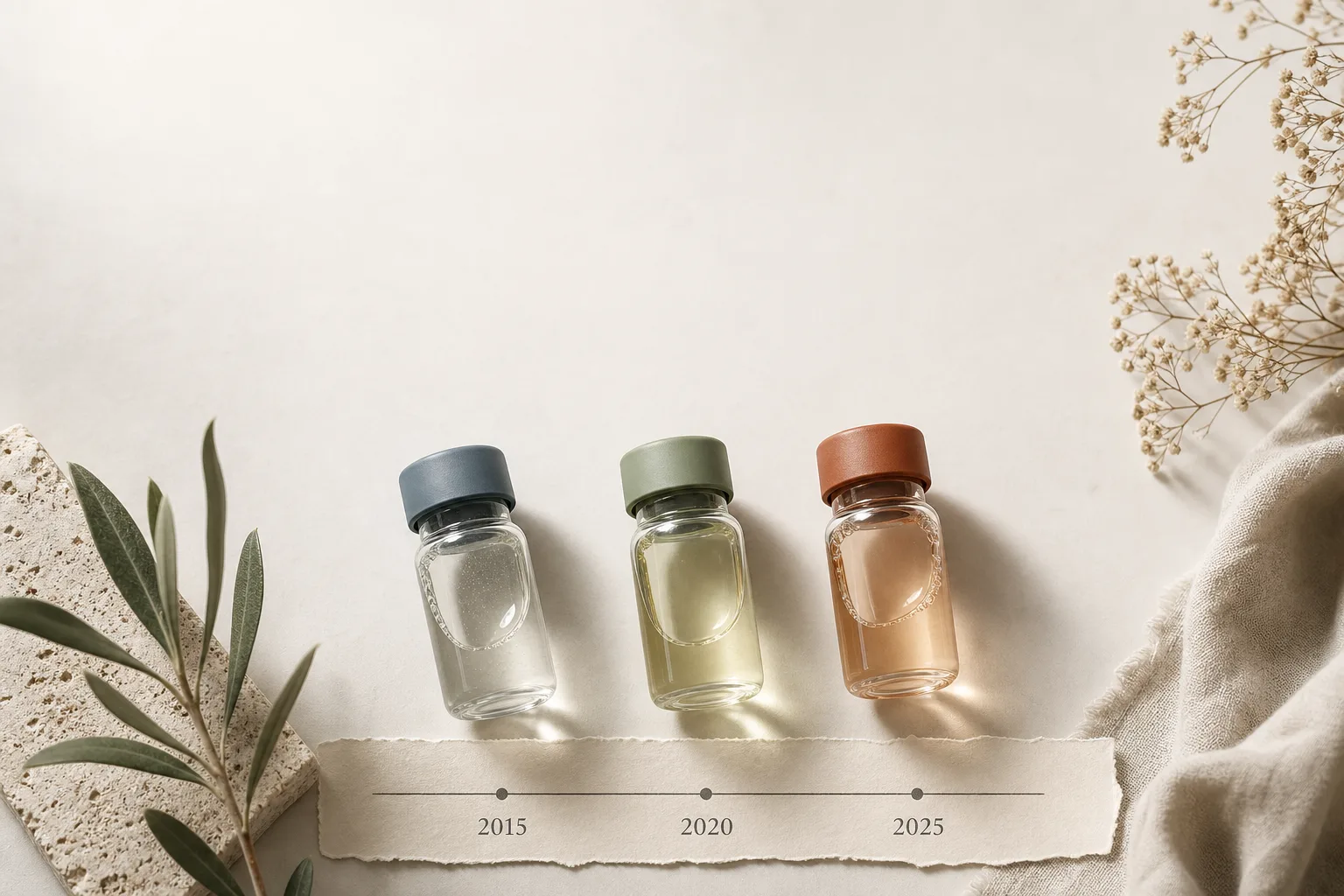
Editorial overhead still life on a soft off-white surface: three small unbranded glass vials in a loose row, each capped in a different muted hue (slate-blue, sage green, warm rust). A thin paper timeline strip runs across the bottom of the frame with three subtle markers labelled by year. No faces, no clinical setting, no needles depicted. Magazine-cover composition, restrained palette, sans-serif typography, generous negative space at the top for a headline.

CagriSema and the Pipeline Past Retatrutide

May 01, 2026By Peptide Science Editorial

The next-generation incretins: CagriSema (cagrilintide + semaglutide), survodutide (GLP-1/glucagon), MariTide (Amgen, GLP-1/GIP-antagonist), and the amylin angle. What the phase 3 data shows so far and where each fits if it ships.
cagrisemacagrilintidesurvodutidemaritideamylindual-agonistsforward-looking
Editorial overhead still life on a soft off-white surface: a single small unbranded glass vial with a rubber stopper resting next to a folded blood-test request form and a coiled stethoscope just visible at the edge of frame as a textured background element. No faces, no clinical setting, no needles depicted, no branding. Magazine-cover composition, restrained palette of bone, slate-blue and warm rust, generous negative space at the top for a headline.

Cancer Risk and Growth Factors: Real Data, Theoretical Risk, and the Screen That Matters

Apr 29, 2026By Peptide Science Editorial

BPC-157, TB-500, IGF-1 LR3 and GHK-Cu are routine in this catalogue, and they share a question users hand-wave too often: do they cause or accelerate cancer? This article separates angiogenesis from mitogenesis from cell migration, gives the actual evidence per mechanism, and lays out the pre-cycle screen that’s worth doing.
cancer-riskgrowth-factorsbpc-157tb-500igf-1-lr3ghk-cuvegfangiogenesisscreeningoperator-reference
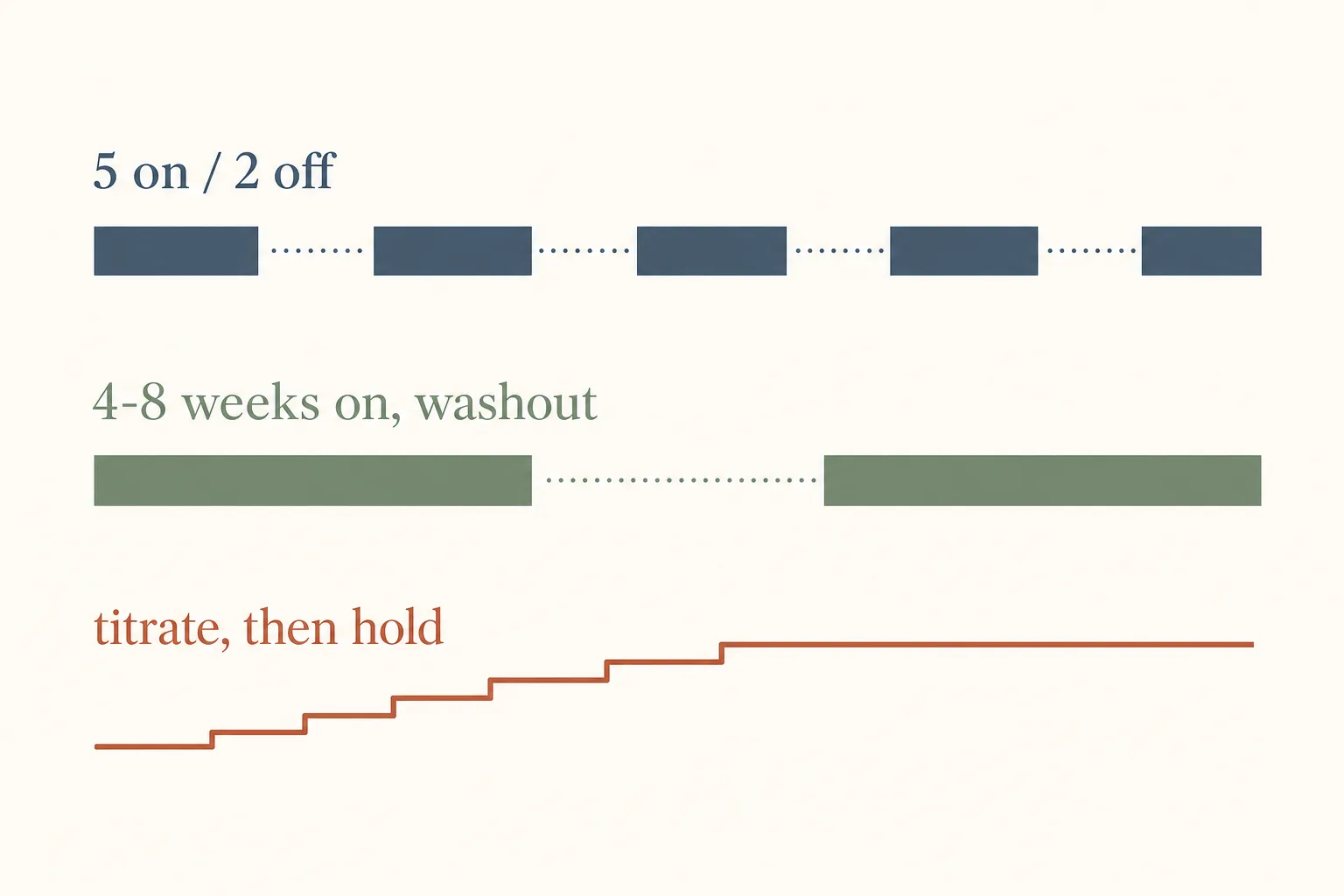
Editorial illustration on a soft off-white surface showing three small horizontal time-strip diagrams stacked vertically. Top strip: alternating short solid bars labelled '5 on / 2 off' (pulsatile cycling). Middle strip: a long solid bar followed by a gap then another long bar, labelled '4-8 weeks on, washout' (theoretical-risk cycling). Bottom strip: a low rising staircase plateauing at a flat line labelled 'titrate, then hold' (GLP-1 dose strategy). Magazine-grade infographic style, restrained palette of slate-blue, sage and warm rust on bone, generous white space, no axes or grid lines.

Cycling Strategies: When to Pulse, When to Hold, When to Run Continuous

Apr 29, 2026By Peptide Science Editorial

Three different mechanisms hide behind the word "cycling" - receptor desensitisation, theoretical-risk washouts, and titrate-and-hold dose strategy. This article separates them by peptide class and lays out the on/off patterns that actually map to each.
cyclingtachyphylaxisdownregulationipamorelinmelanotanbpc-157glp-1tesamorelinoperator-reference
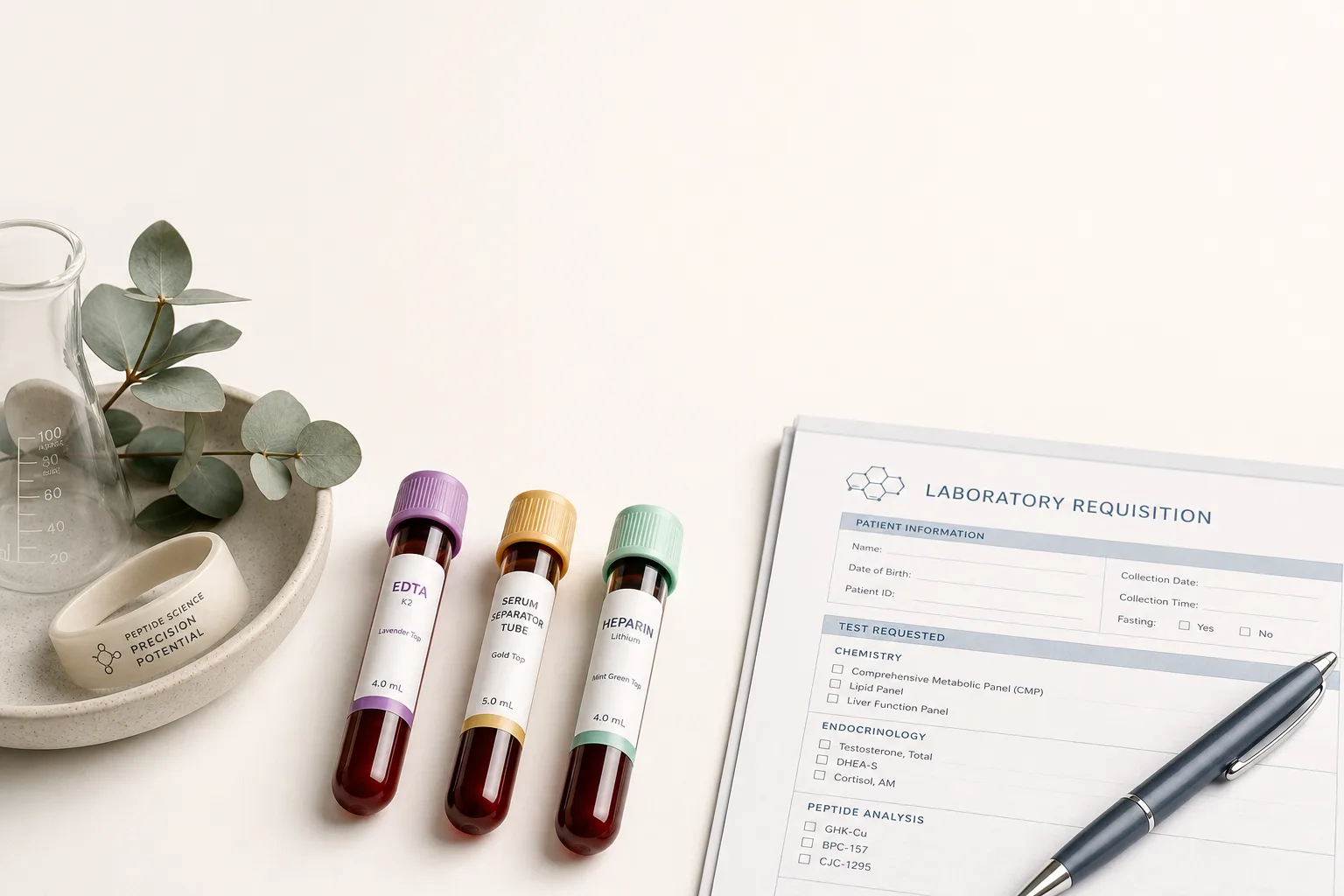
Editorial overhead still life on a clean lab bench: a row of three blood-collection tubes (purple-top EDTA, gold-top serum-separator, mint-green-top heparin) standing next to a folded lab requisition form and a precision pen. No labels, no faces, no needles. Magazine-cover composition, desaturated palette of bone, slate-blue and warm rust on off-white, soft directional light, generous negative space at the top for a headline.

Bloodwork for Peptide Users: What to Test, When, and Why

Apr 27, 2026By Peptide Science Editorial

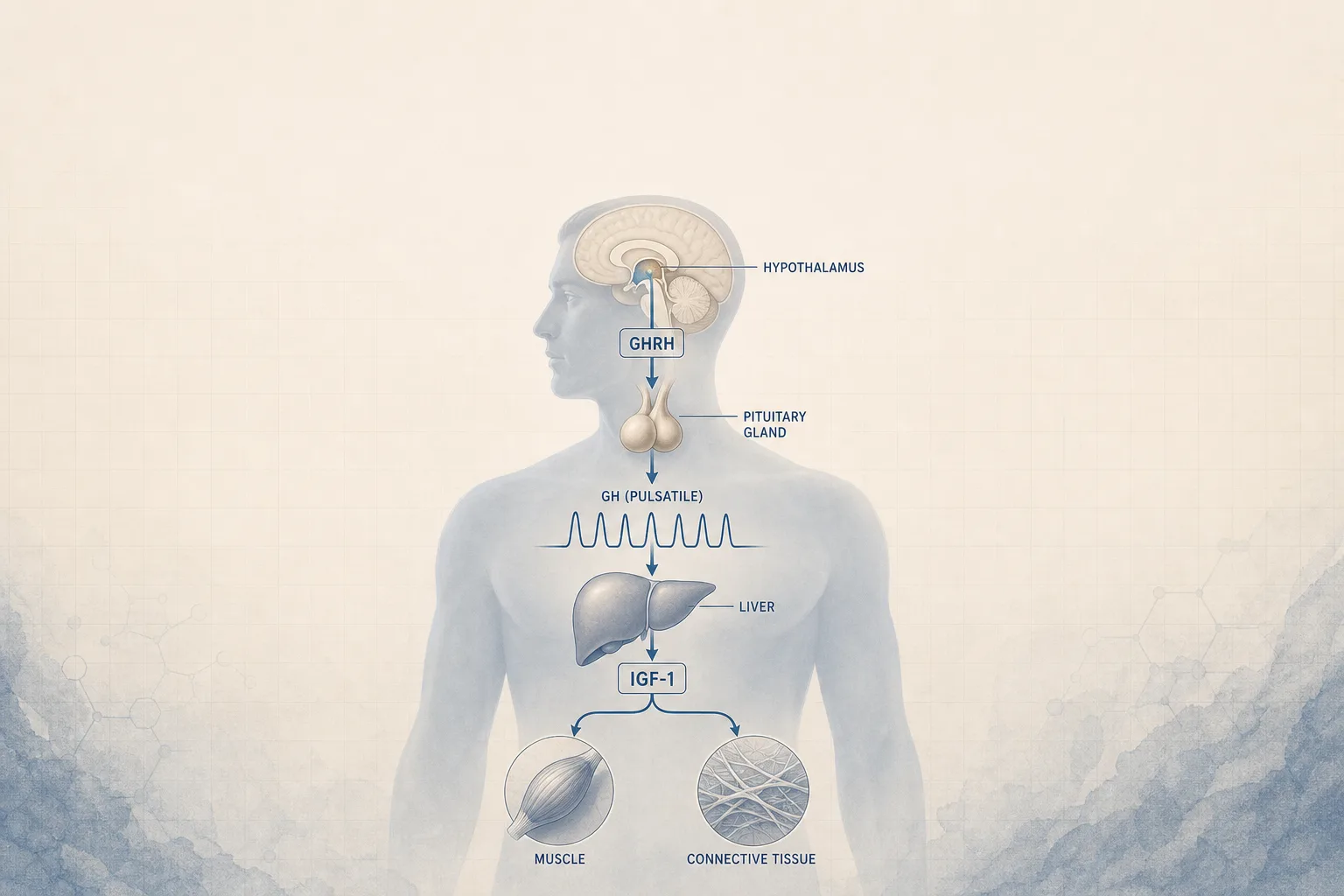
A working bloodwork framework for peptide users: baseline panel, per-class follow-up panels (GH axis, GLP-1, healing, melanocortin, IGF-1 LR3, thymosin), timing, and what to do with the numbers.
bloodworkmonitoringigf-1hba1cglucoselipidspaneloperator-reference
Editorial product-shot composition: three identical unbranded prefilled subcutaneous auto-injector pens stand in a row on a soft seamless backdrop, lit from the upper left. Each pen is subtly tagged with a tiny floating label above it (1 / 2 / 3) without showing any actual brand text. Clean medical-editorial photography, desaturated cool palette of mint, slate and bone, soft shadows, magazine-cover composition with negative space at the top for a headline.

Semaglutide vs Tirzepatide vs Retatrutide: An Honest Comparison

Apr 27, 2026By Peptide Science Editorial

The three compounds defining modern incretin therapy compared on mechanism, trial efficacy, side-effect load, cost, and supply. Decision tree at the end.

glp-1gipglucagonsemaglutidetirzepatideretatrutidefat-lossincretincomparison